
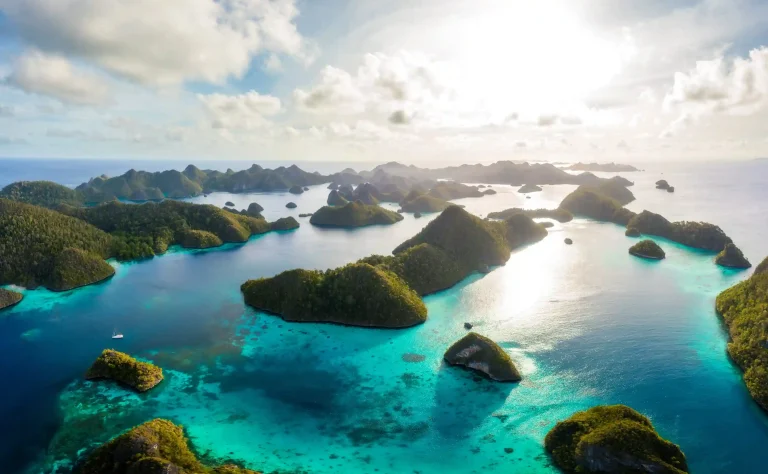
Misool vs Komodo: Which Indonesian Diving Destination is Best?
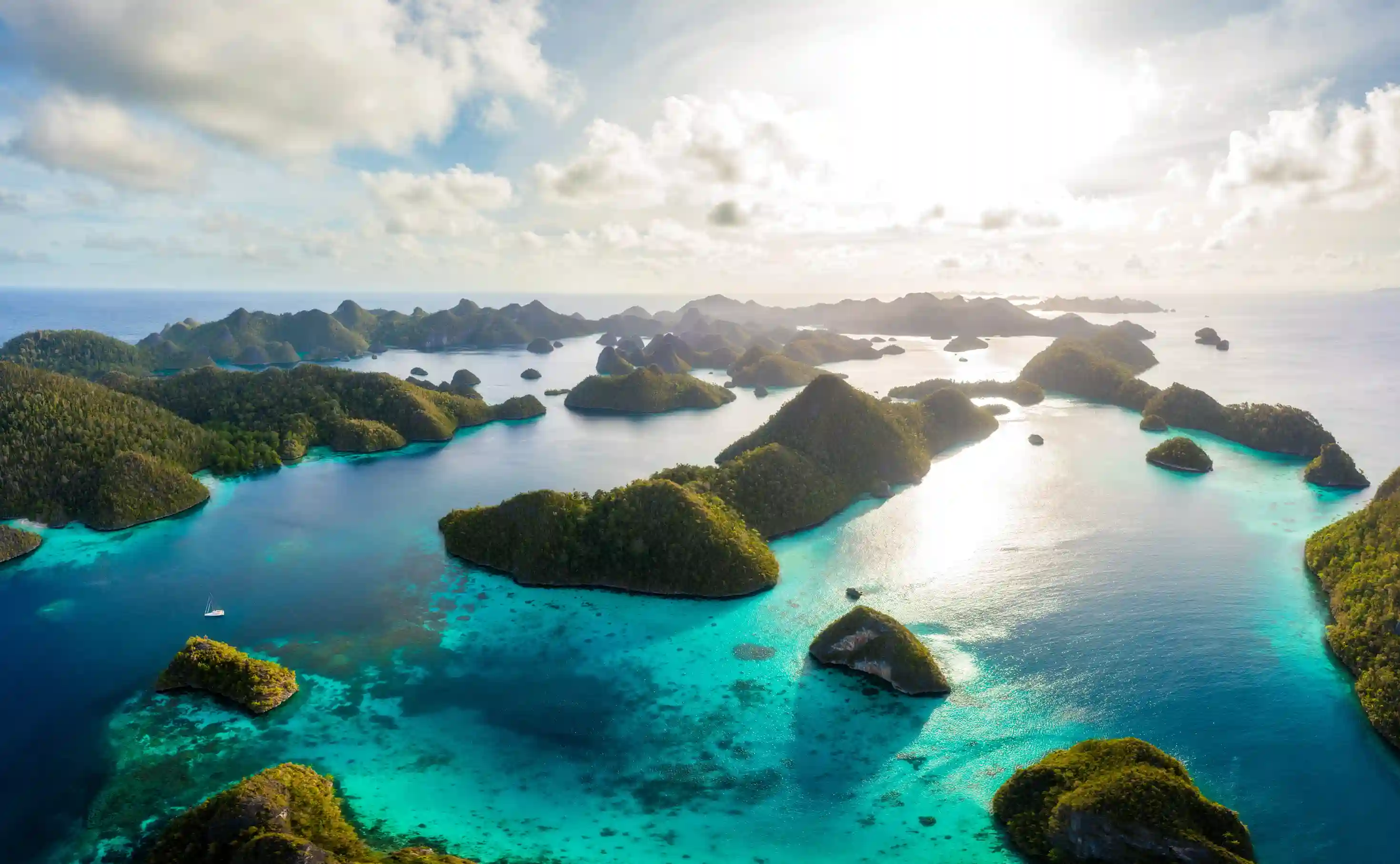
- Biodiversity: Misool is home to 75% of the world’s known coral species and over 1,500 species of fish.
- Exclusivity: Its remote location ensures a private, intimate diving experience away from the crowds.
- Reef Health: Protected by a 1,220 sq km Marine Reserve, its reefs are exceptionally pristine and resilient.
The rhythmic hiss of your regulator is the only sound that pierces the deep, enveloping blue. Below, a sloping reef wall explodes in a tapestry of color so intense it seems almost artificial. A school of yellow-masked angelfish, hundreds strong, drifts past. You are suspended in the warm, clear waters of the Indonesian archipelago, faced with a choice that has vexed even the most seasoned underwater explorers. It’s a question I’m frequently asked at galas from Monaco to Singapore: when it comes to the titans of Indonesian diving, where should one invest their precious time—Misool or Komodo?
The Heart of the Coral Triangle: Misool’s Unrivaled Biodiversity
To understand Misool, you must first understand its geographic providence. It sits in the southern part of Raja Ampat, an archipelago that is, without hyperbole, the global epicenter of marine biodiversity. This isn’t marketing copy; it’s a scientific fact. Dr. Gerry Allen, the celebrated ichthyologist, famously counted 374 different fish species on a single dive here. The region hosts 537 coral species, which accounts for a staggering 75% of all known species on Earth. This biological richness creates an underwater environment of almost incomprehensible density and variety. During a recent expedition, my logbook entries read like a fantasy: pygmy seahorses hiding in plain sight, walking sharks patrolling the reef at dusk, and vast aggregations of schooling fish that block out the sun.
The secret to this vitality lies in a forward-thinking conservation model. The 1,220 square kilometer Misool Marine Reserve, established in 2005, is a strictly enforced no-take zone. I recall a conversation with a local patrol leader who explained that fish biomass increased by an average of 250% within just six years of its creation. This success translates directly to the diver’s experience. You are not just visiting a reef; you are immersing yourself in a fully functioning, thriving ecosystem. The experience of exploring these protected waters is the very essence of a misool diving expedition, a journey into a world as it was meant to be.
Komodo’s Realm of Dragons and Currents
Komodo, by contrast, offers a different, though equally compelling, proposition. Situated between the islands of Sumbawa and Flores, the Komodo National Park is a land of stark, dramatic beauty. Its arid, savanna-like hills, a result of the dry winds from the Australian continent, are a world away from Misool’s lush, jungle-draped karsts. The main draw, of course, is the formidable Komodo dragon (Varanus komodoensis), the world’s largest lizard. A guided trek on Rinca or Komodo island to see these three-meter-long predators is a primal experience that few destinations can match. The park, established in 1980 and designated a UNESCO World Heritage Site in 1991, protects this unique terrestrial environment.
Underwater, Komodo is defined by one powerful force: current. The Indonesian Throughflow funnels immense volumes of water from the Pacific to the Indian Ocean through the park’s narrow channels, creating some of the most exhilarating drift dives on the planet. Sites like Batu Bolong and The Cauldron are legendary for their high-voltage action. These currents attract an abundance of pelagic life. Komodo is one of the most reliable places in Indonesia to encounter manta rays, particularly at cleaning stations like Manta Point. You’ll also find grey reef sharks, giant trevallies, and Napoleon wrasse. The diving here is less about quiet contemplation of coral minutiae and more about surrendering to the power of the ocean.
Topography and Underwater Landscapes: A Tale of Two Worlds
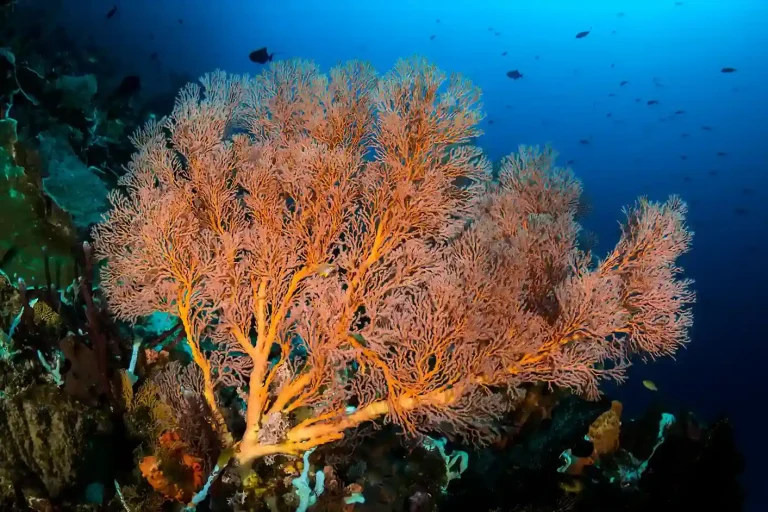
The fundamental character of a dive is shaped by its environment, and here the two destinations diverge completely. Misool’s underwater landscape is a direct extension of its topside geology: a labyrinth of ancient limestone karsts. Over millennia, erosion has sculpted these islands into a maze of hidden lagoons, caves, and dramatic overhangs. Underwater, this translates into dive sites of extraordinary complexity and beauty. At Boo Windows, you can swim through two large, eye-like holes in the rock. At Magic Mountain, an offshore seamount, you’ll find a reef crest blanketed in a multi-hued carpet of soft corals that cascades down into the depths. These structures provide the perfect canvas for gorgonian sea fans, some several meters across, and a near-infinite number of nooks for macro critters to hide. The feeling is one of intimate discovery, of exploring a submerged, living cathedral.
Komodo’s topography is born of fire, not water. Its volcanic origins are evident in the dark, volcanic sand and the grand, imposing scale of its underwater structures. The classic Komodo dive involves descending onto a submerged pinnacle, like Castle Rock or Crystal Rock, and hooking into the reef to watch the spectacle unfold in the current. These pinnacles rise dramatically from the seabed, acting as beacons for marine life. The coral here is healthy, but it tends to be hard corals that are more resilient to the powerful currents. The visual signature is one of raw power and monumental scale—a grand amphitheater for pelagic encounters rather than an intricate art gallery. The experience of navigating these powerful sites is a key part of our Misool Diving — Raja Ampat South Pristine Reef Expeditions, where understanding water movement is paramount.
The Luxury Travel Experience: Exclusivity vs. Accessibility
For the Departures reader, the quality of the entire journey matters, not just the time spent underwater. In this respect, Misool and Komodo present two very different models of luxury tourism. Reaching Misool is an endeavor that rewards the committed traveler. The journey involves flying into Sorong (SOQ) in West Papua, followed by a private speedboat transfer that can take up to four hours, whisking you away to a truly remote corner of the world. This logistical barrier is, in fact, one of Misool’s greatest assets. It naturally limits the number of visitors, ensuring that dive sites remain uncrowded and the sense of splendid isolation is preserved. The top-tier operators here focus on low-volume, high-quality experiences, whether land-based or on a select few liveaboards. This guarantees a level of personal attention and exclusivity that is increasingly rare.
Komodo is far more accessible. The gateway town of Labuan Bajo (LBJ) has a bustling airport with multiple daily flights from Bali and Jakarta. This ease of access has fueled a rapid growth in tourism infrastructure. While there are excellent luxury liveaboards and hotels, the sheer volume of operations—from budget backpacker boats to high-end yachts—means that popular sites can become congested. It is not uncommon to see five or more boats moored at a single famous dive site during high season. While Komodo offers more choice, it comes at the cost of the pristine solitude that defines the Misool experience. As the official Indonesian tourism board notes, managing this growth is one of the park’s key challenges.
Diving Conditions and Seasonality
A diver must always consider the elements. Misool’s prime diving season runs from roughly October to April, coinciding with the northwest monsoon which, counterintuitively, brings calmer seas to the southern Raja Ampat region. The water is consistently warm, typically 28-30°C (82-86°F), and visibility often exceeds 30 meters. The archipelago’s geography provides numerous sheltered bays and channels, meaning calm conditions can almost always be found. This makes for relaxed, comfortable diving, allowing you to focus on the staggering biodiversity around you.
Komodo’s diving season is generally considered to be the dry season, from April to November. The defining characteristic here, as mentioned, is the current, which can range from a gentle drift to a formidable force exceeding 8 knots in channels like the Sape Strait. Water temperatures can also fluctuate dramatically. In the park’s south, nutrient-rich upwellings from the Indian Ocean can drop temperatures to a brisk 20-24°C (68-75°F), requiring a 5mm wetsuit. In the north, waters are a more tropical 27-29°C (81-84°F). While this variability creates a diverse marine environment, it also demands a higher level of experience and preparedness from divers. Choosing the right operator who understands these complex hydrodynamics is crucial for both safety and enjoyment. Our deep local knowledge ensures every misool diving trip is perfectly timed and executed.
A Quick FAQ: Misool vs Komodo Diving
Which is better for beginner divers?
While both destinations offer sites suitable for all levels, Misool’s generally calmer, protected waters and lack of extreme currents make it a more comfortable and reassuring environment for those with fewer dives. Komodo’s signature sites often require experience in handling strong currents.
I’m a passionate underwater photographer. Which should I choose?
For macro and reefscape photography, Misool is in a class of its own. The sheer density of subjects—from Denise’s pygmy seahorses to kaleidoscopic soft coral gardens—is unparalleled. For wide-angle shots of large pelagics like manta rays in action, Komodo offers fantastic opportunities, but Misool’s reef health and color saturation provide a superior canvas.
What about the cost difference?
The logistical challenges of operating in such a remote area mean that a high-end Misool experience often represents a more significant investment. This premium reflects the exclusivity, pristine nature of the sites, and the comprehensive conservation work that underpins the entire operation. Komodo offers a broader spectrum of price points due to its accessibility and higher volume of operators.
Can I see manta rays in both locations?
Absolutely. Komodo is justly famous for its manta congregations. However, Misool is a world-class manta destination in its own right, with several reliable cleaning stations like “Manta Sandy” that attract both oceanic and reef mantas, often in a more intimate and less crowded setting.
Ultimately, the choice hinges on your priorities as a traveler and a diver. Komodo offers a magnificent adventure, a blend of prehistoric topside encounters and adrenaline-fueled underwater action. It is a worthy destination on any diver’s list. But for those who seek the absolute zenith of marine life, a journey into the vibrant, beating heart of the ocean’s coral ecosystems, the answer is unequivocally Misool. It is an immersion in a world of unparalleled richness, a sanctuary of life that must be seen to be believed. When you are ready to witness the pinnacle of underwater exploration for yourself, our team is here to design your bespoke misool diving journey. We invite you to explore our pristine reef expeditions and discover the difference that true exclusivity and conservation-led travel can make.
Keep Reading
Travel Journal
Best Misool Pinnacle Dives 2027: A Comprehensive Guide
Misool's pinnacle dive sites offer extraordinary biodiversity and stunning underwater landscapes, making them an essential part of any diving itinerary…
Travel Journal
Best Budget Options to Dive Misool 2027
For 2027, the best budget options to dive Misool include exploring shared accommodation packages and group diving deals at local…
Travel Journal
Exploring the Best Misool Wall Dives 2027: Unveiling Dramatic Underwater Topography
For those seeking the best Misool wall dives in 2027, head to the southern region of Raja Ampat. This area…