About Misool Diving — Method, Trust, Captains


About Our Misool Diving Method, Trust, and Captains | Misool Diving Raja Ampat


The Method Behind Our Misool Diving Expeditions

About Misool Diving — Method, Trust, Captains

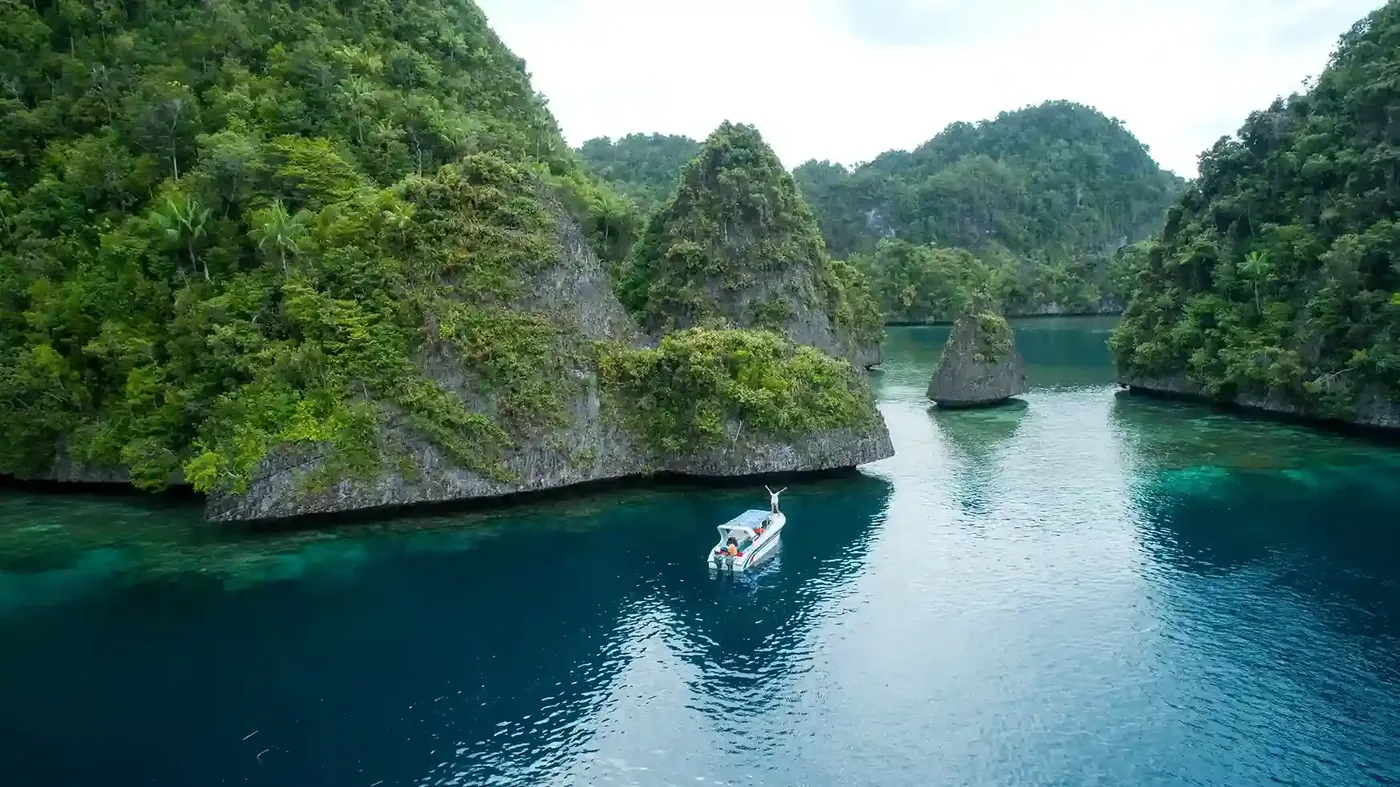
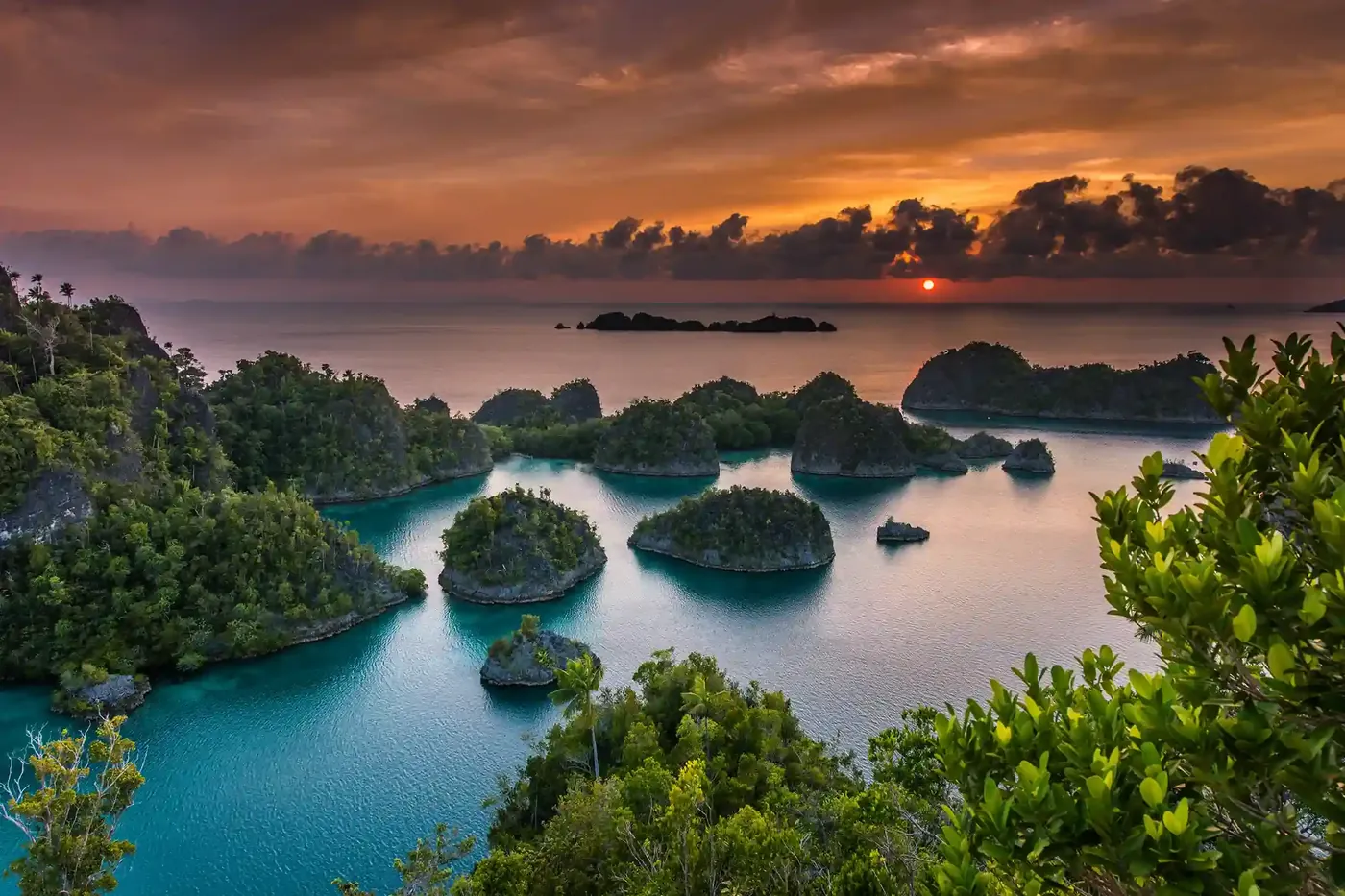
For the discerning diver, Raja Ampat is not a monolith. The vast archipelago, comprising over 1,500 islands, presents distinct bioregions. The north is known for its passages and large schools of fish, but the south—Misool—is a different proposition entirely. It is a labyrinth of limestone karsts, a crucible of marine evolution where biodiversity reaches a density found in few other places on Earth. Navigating and diving this region successfully demands more than a capable vessel; it requires a specific, deeply considered methodology. This is the foundation of Misool Diving Raja Ampat. Our operation is not a generalist tour of the Four Kings; it is a specialist practice dedicated to the singular ecosystem of Misool. We focus on precision, local knowledge, and an operational integrity that ensures access to the area’s most protected and vibrant reef systems. Our approach is built on three pillars: a scientific origin, a dynamic curation process, and the verifiable expertise of our captains and crew. See also: Contact.

An Origin Forged in Marine Science

Misool Diving Raja Ampat was established in 2011 not by tourism operators, but by marine biologist Dr. Ardi Setyawan. During his post-doctoral research with the Indonesian Institute of Sciences (LIPI), Dr. Setyawan’s work focused on larval dispersal patterns within the Coral Triangle. His data, collected over a three-year period from 2008 to 2010, revealed a critical insight: the complex current patterns and nutrient-rich upwellings around Misool created a self-seeding ‘species factory.’ He recorded concentrations of juvenile fish populations, particularly among certain families of wrasse and damselfish, that were up to 40% higher than in sampling sites in the Dampier Strait. He understood that Misool was not just a destination; it was the biological engine of the entire Raja Ampat archipelago. See also: explore Home.

This realization led to the company’s founding principle: an expedition here should be an immersion in this biological phenomenon, not a superficial survey. The first vessel, the Pencari, was commissioned in 2012 with a clear mandate: to facilitate multi-week, south-only itineraries for researchers and serious underwater photographers. The commercial viability of this focused approach was initially questioned. Standard liveaboard routes at the time typically allocated only two or three days to Misool as part of a longer, 10-day circuit of Raja Ampat. Dr. Setyawan’s hypothesis was that a segment of the diving community would value depth over breadth—a conviction that proved correct. Our first fully-booked charter, a 10-day expedition priced at USD 5,500 per person, departed from Sorong on October 15, 2012, and focused exclusively on the Boo, Fiabacet, and Wayilbatan island groups. This singular focus on the science and sanctity of Misool Raja Ampat remains the core of our operational DNA.

The Curation Process: Beyond the Charted Reef

A successful expedition in Misool is a function of timing. The currents that deliver the nutrients and concentrate the marine life are notoriously complex. A dive site that is placid and teeming with life at 10:00 AM can be a washing machine with poor visibility by noon. Our curation method rejects the fixed, static itineraries common in the industry. Instead, we employ a dynamic, intelligence-led approach to planning each day’s dives. This process is informed by several layers of data.

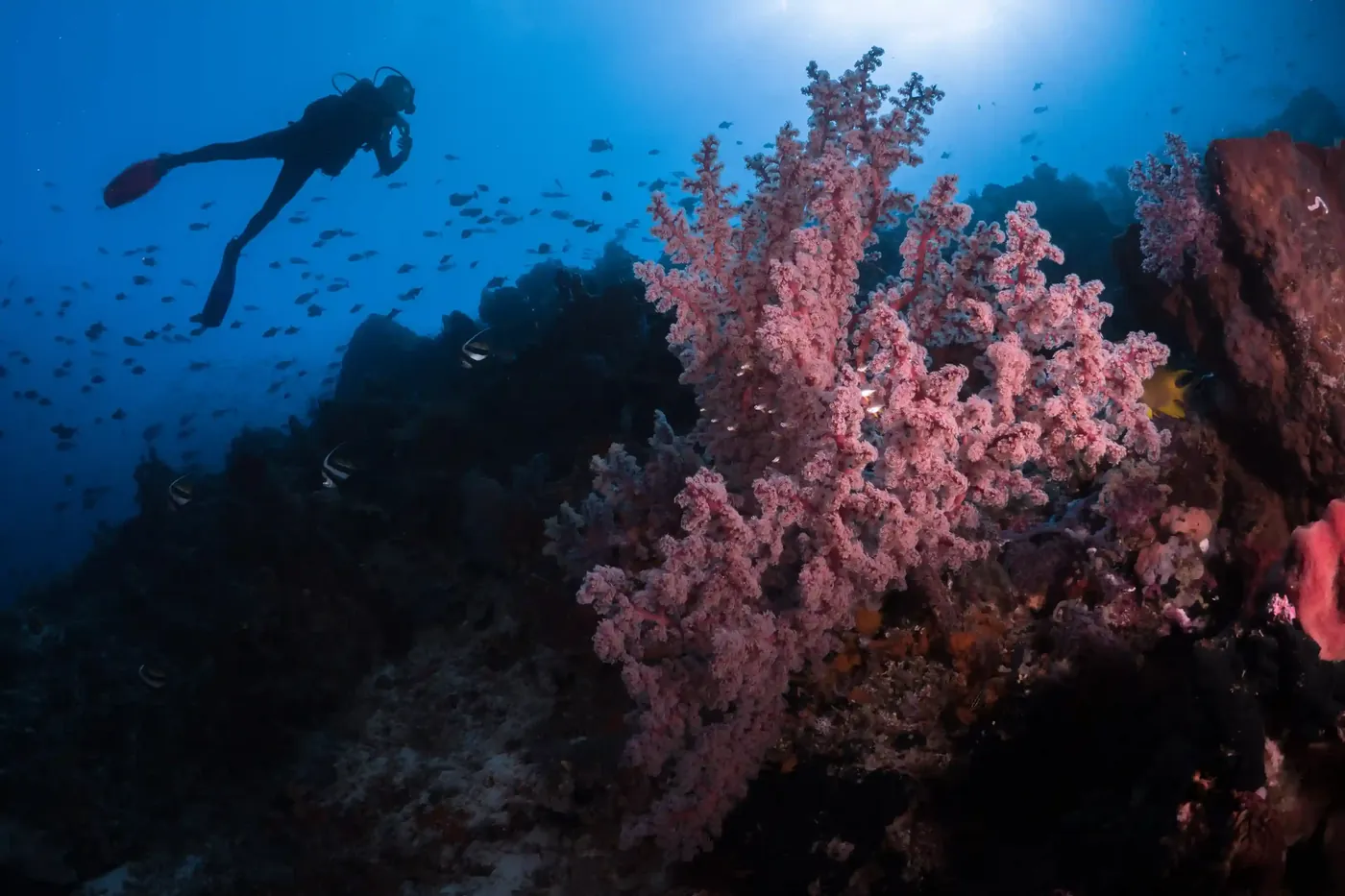
First, we utilize proprietary tidal and current modeling software developed in partnership with oceanographers at the Bandung Institute of Technology. This system cross-references lunar cycles, seasonal weather patterns, and bathymetric data to forecast optimal windows for specific Misool dive sites. For example, it allows us to predict with high accuracy the best time to dive the ‘Magic Mountain’ seamount to witness the confluence of oceanic and reef manta rays. Second, our expedition leaders conduct continuous reconnaissance. At least twice a year, during the shoulder seasons in May and September, we run non-commercial scouting trips to explore new channels and assess the health of established reefs. Our 2023 survey of the Daram Islands, for instance, resulted in the charting of three new sites, including a pristine hard coral garden we named ‘Gorgonian Passage.’

This meticulous planning ensures our guests experience the reefs at their biological peak. Our dive briefings are not just about safety and navigation; they are ecological narratives explaining why we are at a particular site at a particular time. This commitment to curation includes:

  • Pre-Expedition Intelligence: Detailed analysis of tide charts and current models for the specific dates of your charter.
  • Onboard Adaptation: The Expedition Leader and Captain confer three times daily to adjust the plan based on real-time surface and underwater conditions.
  • Site Rotation Protocol: We maintain a log of every dive on every site to manage pressure on the ecosystem, ensuring no single reef is over-dived. Our internal policy mandates a minimum 72-hour rest period for high-traffic sites like ‘Boo Windows.’

Our Phinisi Fleet: A Study in Indonesian Maritime Heritage

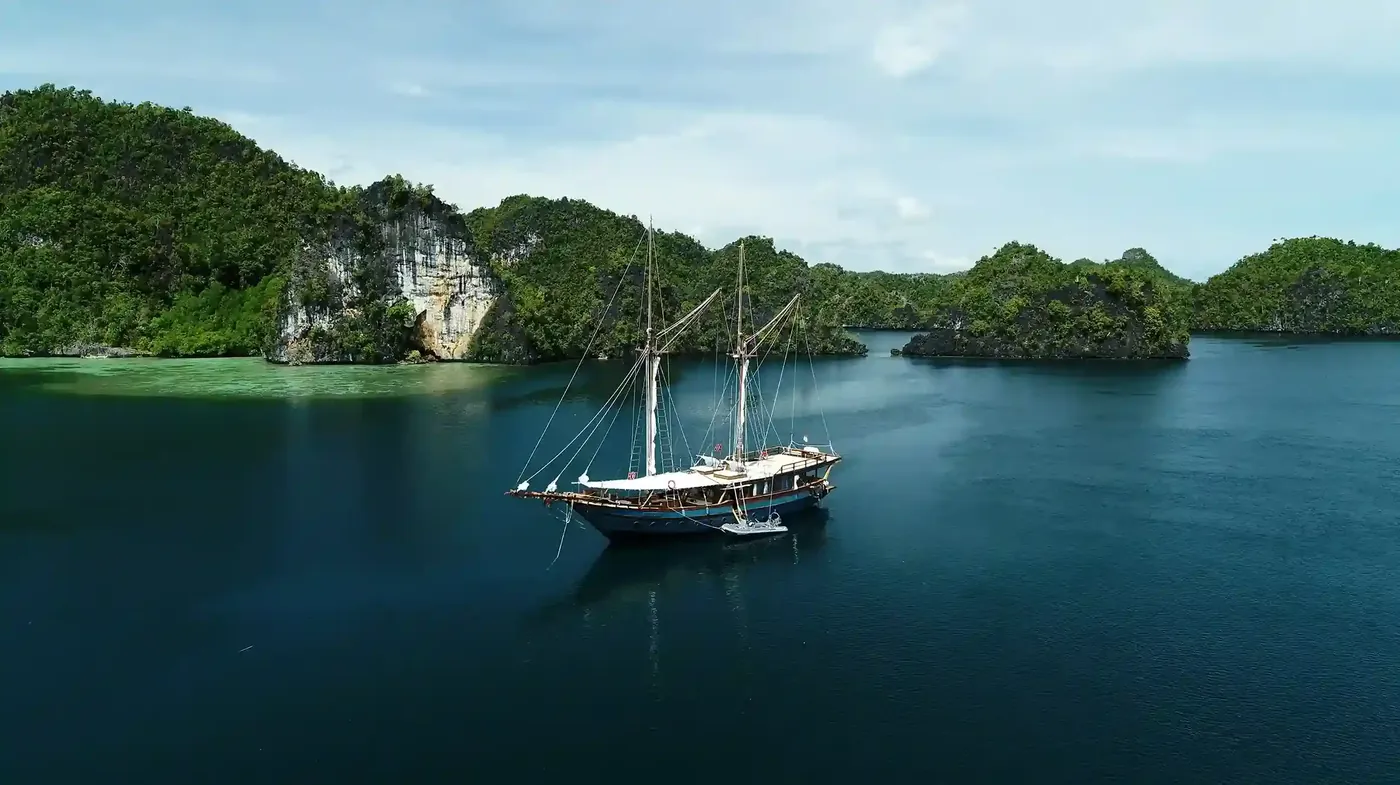
Our vessels are not merely platforms for diving; they are integral to the expedition experience. We operate two traditional Indonesian phinisi schooners, the Juang Laut (45 meters) and the Samudra Biru (40 meters). Both were constructed by the Konjo boat builders of Tanah Beru, South Sulawesi, a community with a shipbuilding lineage recognized by UNESCO as an Intangible Cultural Heritage. The hulls are crafted from ironwood (kayu ulin) and the superstructures from tropical teak, providing exceptional stability and seakeeping qualities in the variable conditions of the Seram Sea.

The Juang Laut, launched in 2018 after a 24-month build, is our flagship. It accommodates a maximum of 14 guests in 7 cabins, ensuring ample space and privacy. It is powered by two Yanmar 500hp marine engines, providing redundant propulsion for safety. The navigation suite includes a Furuno commercial-grade radar, MaxSea TimeZero charting software, and both satellite and SSB radio communications. For divers, the amenities are purpose-built. A climate-controlled camera room features individual stations with 220v and 110v charging points. The dive deck is expansive, with two hot-water showers and dedicated rinse tanks for cameras and regulators. A Coltri membrane nitrox system provides EANx blends up to 36%. These are not the features of a standard misool liveaboard; they are the tools of a professional-grade remote diving operation.

The Captains and Crew: Navigating Misool’s Intricate Waterways

The most sophisticated technology is secondary to human expertise. Misool’s underwater topography is mirrored above the surface in a maze of karst islands, hidden channels, and submerged reefs. Safe and efficient navigation is an art form, one mastered by our senior captains, Hendra Gunawan and Ismail Hasan. Captain Gunawan has been at the helm of expedition vessels in Eastern Indonesia for over 20 years, logging more than 25,000 nautical miles in Raja Ampat alone. His knowledge of Misool’s anchorages, currents, and weather patterns is encyclopedic. Captain Hasan, a native of Sorong, has spent his entire 15-year career navigating these waters, bringing an intuitive understanding of the local environment that cannot be learned from charts.

This expertise extends to our entire crew. Our dive guides are not seasonal hires; they are full-time employees, each with a minimum of 1,000 logged dives in Raja Ampat. We maintain a strict guide-to-guest ratio of 1:4. Every guide is a certified PADI Divemaster or Instructor and a DAN-certified Emergency Oxygen Provider. They are trained to identify hundreds of species of fish and coral, transforming each dive from a simple underwater tour into an interpretive experience. The trust our guests place in us is earned through the demonstrable competence of our team. Their professionalism is the core of our risk management and the key to a successful Misool diving expedition.

A Commitment to Safety and Operational Integrity

Operating in a remote area like Misool carries inherent responsibilities. Our commitment to safety is absolute and transparent. Our vessels are equipped and maintained to a standard that exceeds local regulations. This includes a comprehensive inventory of emergency equipment, including a 50-liter main oxygen cylinder, multiple portable O2 units, an automated external defibrillator (AED), and a full medical kit designed for remote maritime operations. We are an official partner of the Divers Alert Network (DAN), and our emergency action plan includes direct communication protocols with their medical staff and established evacuation procedures to Sorong.

Our operational integrity also encompasses our environmental commitment. We operate under a strict zero-discharge policy. All greywater is treated onboard, and all solid waste is compacted and transported back to Sorong for proper disposal. We contribute 1.5% of our annual revenue directly to the Misool Foundation, which manages the 1,220 square kilometer Misool Marine Reserve. Since 2019, our contributions have exceeded USD 45,000, directly funding ranger patrols and community conservation initiatives. Choosing to dive with us means investing in the long-term protection of the reefs you are here to explore. This is a non-negotiable aspect of our business, distinguishing us from operators who may offer a lower price point but lack a comparable commitment to the region’s future.

Comparing Expedition Approaches: The Misool Diving Difference

The choice of operator significantly defines the quality of a Misool diving experience. While many liveaboards include Misool in their itineraries, our specialist approach provides a fundamentally different value proposition. The table below outlines key distinctions between our dedicated expeditions and the more common generalist offerings in Raja Ampat.

Feature Misool Diving Raja Ampat Standard Raja Ampat Liveaboards
Geographic Focus 100% Misool South. 8 to 12-day dedicated itineraries. Combined North/Central/South itinerary. Typically 2-4 days in Misool.
Itinerary Planning Dynamic, based on proprietary current modeling and real-time conditions. Largely fixed, pre-determined route with minimal daily flexibility.
Guide-to-Guest Ratio 1 guide to a maximum of 4 divers. Typically 1 guide to 5 or 6 divers.
Captain’s Expertise Minimum 15 years and 20,000+ nautical miles in Raja Ampat. Variable; may include captains with less specific regional experience.
Conservation Contribution 1.5% of revenue directly funds the Misool Foundation. Often limited to passive support or optional guest donations.
Indicative Price (9D/8N) From USD 7,150 per person. From USD 4,800 to USD 6,000 per person.

Connect With Our Expedition Planners

Understanding the nuances of a Misool expedition is the first step in planning a successful trip. Our expedition planners are not sales agents; they are seasoned divers with direct, personal experience in the region. They can provide detailed information on seasonal variations, what to expect from specific itineraries, and how to best prepare for your time with us. We invite you to begin a conversation about your interest in Misool diving. We manage a limited number of charters each year to maintain the quality of our expeditions and minimize our impact on the ecosystem. We recommend booking 12 to 18 months in advance, particularly for peak season dates between October and April.

Contact us directly to discuss availability and to begin crafting your expedition to the heart of marine biodiversity.

Brand: Misool Diving Raja Ampat
Phone: +62 (811) 394-14563
Email: bd@juaraholding.com
Office: Jalan Sunset Road No. 88, Kuta, Badung, Bali 80361, Indonesia

Byline: Written by Julian Grant, Senior Travel Editor specializing in remote maritime expeditions and conservation-focused tourism. Grant has logged over 500 dives across the Coral Triangle and has reported on Indonesian marine conservation for several international publications.