Misool Resort vs Liveaboard — Pros, Cons, Pricing Comparison


Misool Diving: Resort vs Liveaboard — A Definitive Comparison


Misool Diving: A Definitive Comparison of Resort and Liveaboard Expeditions

Misool Resort vs Liveaboard — Pros, Cons, Pricing Comparison

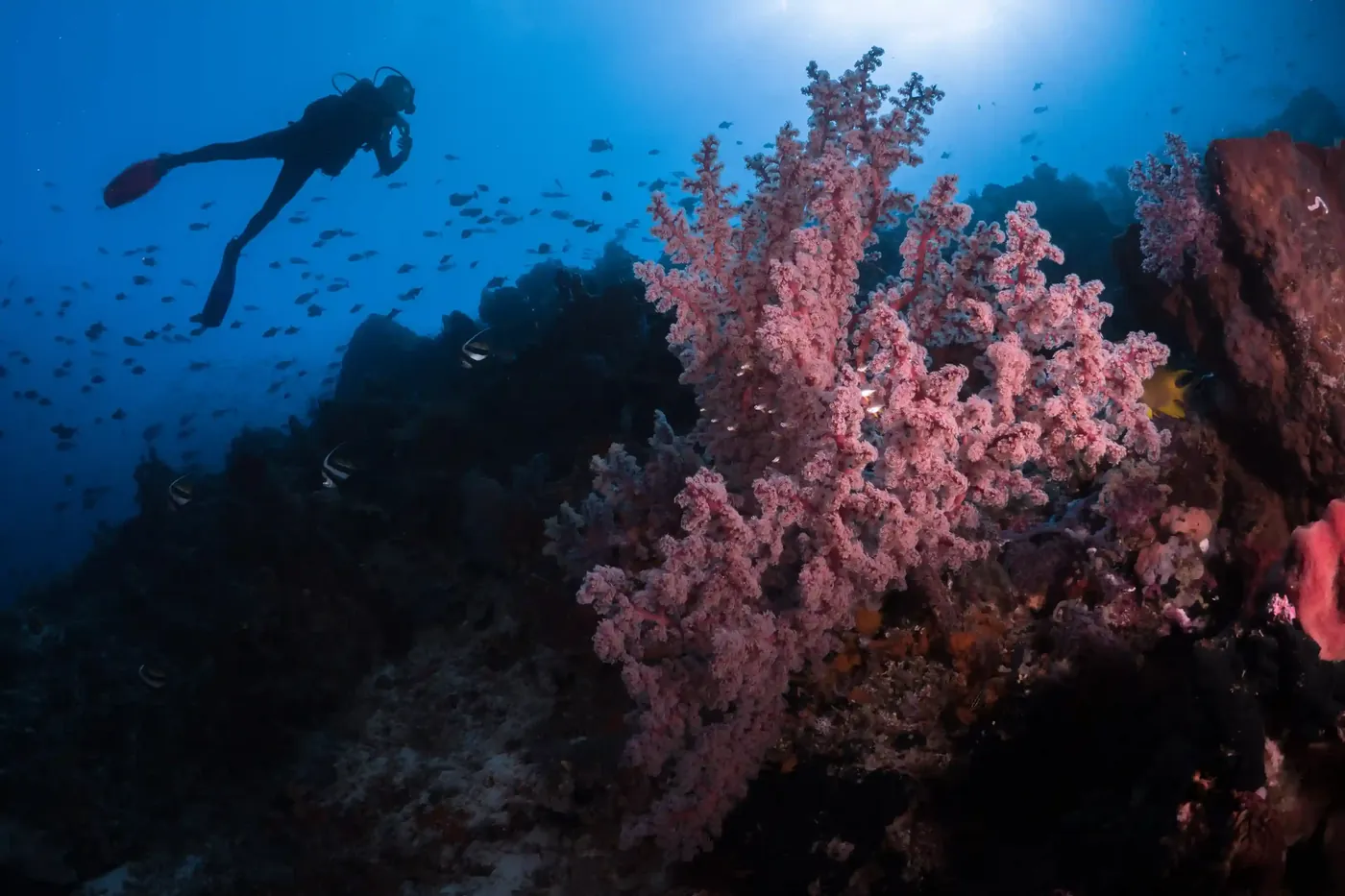
The water’s surface, a sheet of polished turquoise, gives way without a sound. You descend, and the ambient light shifts from tropical glare to a deep, resonant blue. The first thing you notice is the silence, broken only by the slow rhythm of your own breathing. Then, the reef appears—not as a single structure, but as a metropolis of life. A school of yellow-masked angelfish, hundreds strong, parts around you. Below, a two-meter-wide oceanic manta ray (Manta birostris) glides over a garden of soft corals pulsating in the gentle current. This is the sensory immersion of Misool diving, an experience that exists at the very heart of the Coral Triangle, in the remote southern quadrant of Raja Ampat.

Choosing how to access this underwater sanctuary is the first critical decision for any serious diver. The region, a 1,220-square-kilometer Marine Protected Area established in 2005, presents two distinct modalities of exploration: the grounded seclusion of a dedicated Misool dive resort or the nomadic freedom of a Misool liveaboard. Each offers a profoundly different cadence and character for experiencing one of the planet’s most biodiverse marine ecosystems. This analysis is designed to dissect these options, providing the detailed intelligence required to align your expedition with your specific objectives as a diver. See also: our Getting To Misool.

The Misool Conundrum: Land-Based Sanctuary or Roving Phinisi?

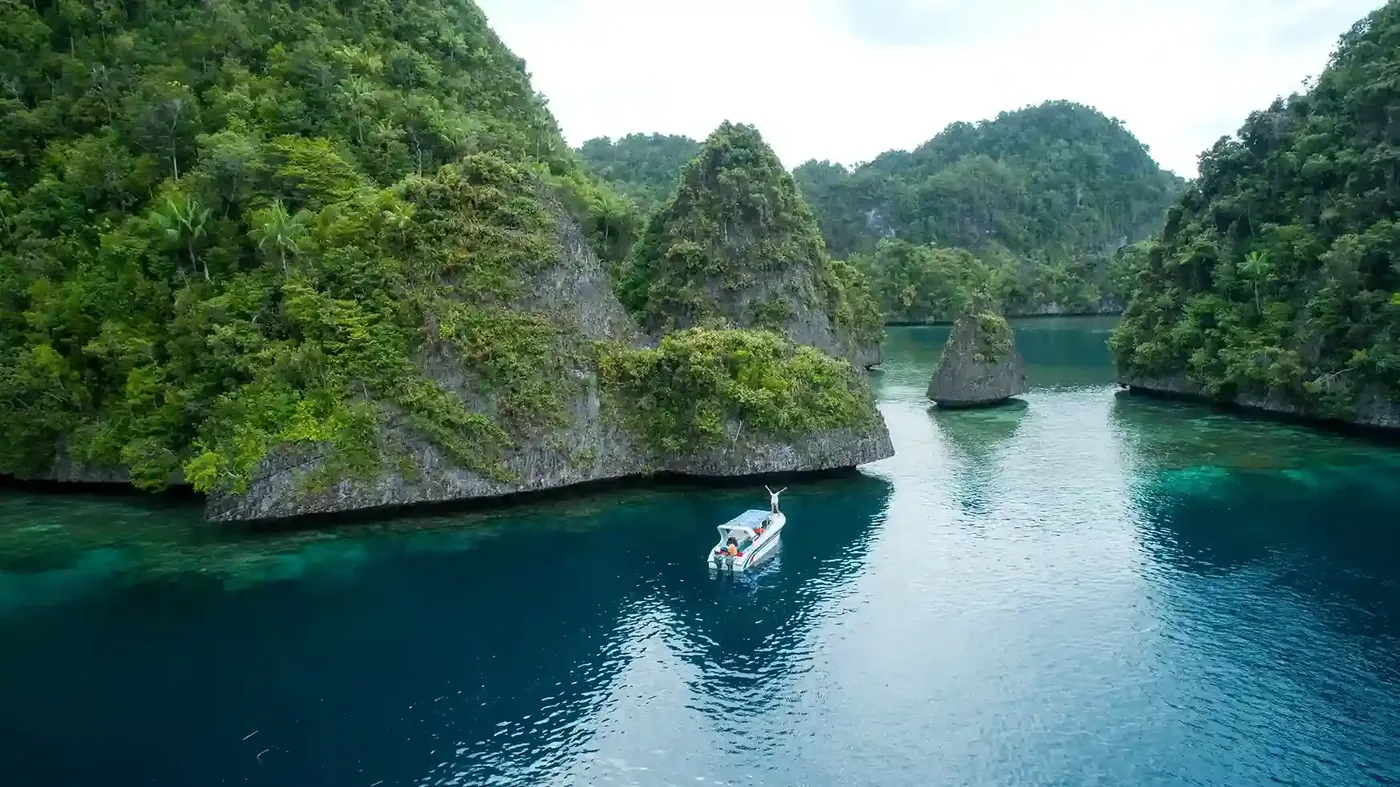
Misool, located off the west coast of West Papua, is an archipelago of limestone karst islands. Its geography dictates the terms of engagement. The region is a complex labyrinth of channels, lagoons, and hidden bays, where over 1,500 species of fish and 75% of the world’s known coral species thrive. The decision between a resort and a liveaboard is not merely logistical; it defines the scope and rhythm of your interaction with this environment. A resort provides a fixed anchor, a base of operations from which to conduct focused, repeated explorations of nearby reefs. A liveaboard, often a traditional Indonesian phinisi schooner, is a self-contained vessel for discovery, designed to cover significant distances and access the archipelago’s most isolated and seldom-visited dive sites. See also: Misool Marine Life guide.

The choice hinges on personal priorities: Is the goal to achieve an intimate familiarity with a specific set of world-class reefs, or is it to chart a course across the breadth of Misool’s underwater topography? Do you prefer the expansive amenities and stability of a land-based operation, or the focused, dive-centric community of a vessel at sea? We will examine the operational realities, benefits, and limitations of each approach to provide clarity for your planning. See also: Misool Diving Raja Ampat Home.

The Misool Dive Resort Experience: An In-Depth Analysis

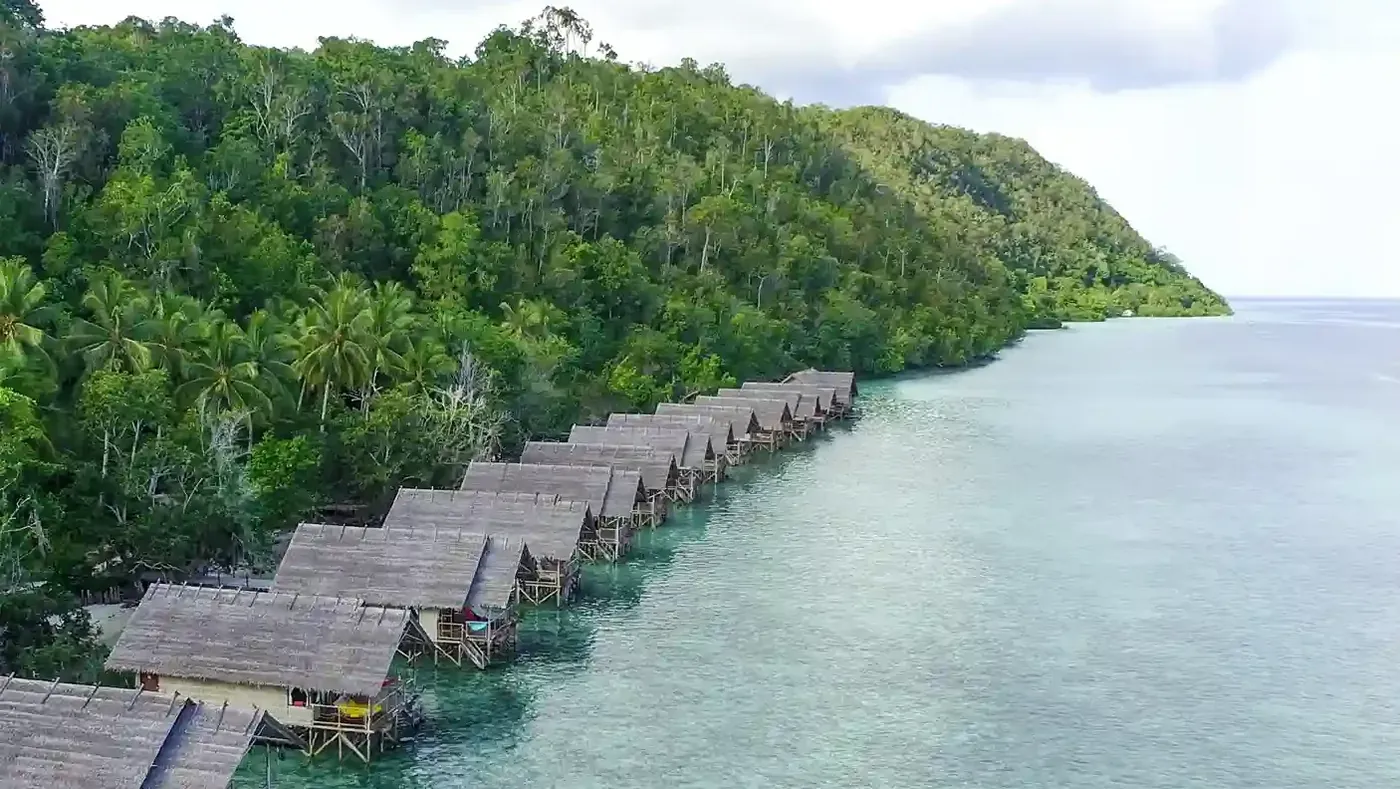
A high-caliber Misool dive resort is an exercise in curated wilderness. These properties are typically constructed with ecological sensitivity, often over the water, granting immediate access to a vibrant house reef. The experience is one of stability, space, and a more relaxed daily schedule. Days are structured around boat dives to nearby sites, but the periods in between offer a level of freedom and comfort a vessel cannot match. See also: book Contact.

The primary advantage is the luxury of time and space. Surface intervals are spent on a private veranda, not a crowded dive deck. Non-diving partners can engage in other activities, from kayaking through mangrove forests to visiting local villages. For underwater photographers, the resort setting provides ample space for equipment setup and the opportunity for unlimited, unguided dives on the house reef to perfect a shot. Dive sites within a 30 to 45-minute speedboat ride, such as the Fiabacet chain or Nudi Rock, become familiar territories, allowing for multiple visits at different times of day to observe changing marine behavior.

Key Characteristics of a Resort Stay:

  • Unrestricted House Reef Access: The ability to dive or snorkel directly from your accommodation at any time is a significant benefit, particularly for photographers and those wanting to maximize water time.
  • Greater Comfort and Amenities: Expect larger living quarters, private bathrooms with fresh water, air conditioning, reliable internet (though still remote), and more extensive culinary options.
  • Ideal for Mixed Groups: A resort better accommodates non-divers or divers with varying levels of enthusiasm, offering alternative activities like paddleboarding, spa services, and island exploration.
  • Logistical Simplicity: Once you arrive, you are settled. There is no need to pack and unpack, and the daily rhythm is predictable and less demanding than a liveaboard schedule.

The principal constraint, however, is geographical. Your diving is tethered to the resort’s location. While the accessible sites are undeniably superb, the truly remote corners of the Misool archipelago, such as the Daram Islands or the eastern seamounts, remain out of reach. A 7-night stay means exploring a world-class neighborhood, but not the entire city.

The Misool Liveaboard Expedition: A Critical Evaluation

To embark on a Misool liveaboard is to commit fully to the pursuit of diving. Life aboard a phinisi, a vessel whose design traces back centuries to the Bugis seafarers of South Sulawesi, is structured around the dive plan. The boat itself is the platform for a continuous journey, moving between anchorages under the cover of night or during surface intervals. This mobility is the liveaboard’s defining advantage, transforming the entire 40,000-square-kilometer Raja Ampat seascape into a potential itinerary.

A typical 10- or 12-night expedition can traverse the full spectrum of Misool dive sites. One day might be spent navigating the iconic Boo Windows and Magic Mountain in the east, known for its cleaning stations frequented by oceanic mantas. The next could be spent exploring the submerged ridges of Wayilbatan or the vibrant coral gardens of the Pele region. This variety is unparalleled. The experience is also intensely communal; you are sharing a confined space with 10 to 16 other dedicated divers, and a strong sense of camaraderie often develops over shared meals and post-dive debriefs. The crew’s expertise in navigating these waters and timing dives to specific tidal conditions is a critical asset.

Defining Features of a Liveaboard Trip:

  • Maximum Dive Site Diversity: The ability to cover vast distances allows for an itinerary that includes Misool’s most celebrated and isolated sites, offering a comprehensive overview of the region’s biodiversity.
  • Dive-Centric Itinerary: The schedule is optimized for diving, often including up to four dives per day, with travel between sites occurring overnight or during meals to maximize underwater time.
  • Access to Remote Areas: Liveaboards are the only practical means of reaching distant island groups like the Daram Islands, which are beyond the range of resort-based day boats.
  • Immersive Experience: Living on the water for the duration of the trip creates a profound connection to the marine environment, with sunrises and sunsets viewed from the deck in remote, silent anchorages.

The trade-offs are in personal space and creature comforts. Cabins, while comfortable on premium vessels, are compact. The motion of the sea is a constant, and the itinerary, while diverse, is fixed for the group. For those seeking a pure, concentrated Misool diving experience, the liveaboard is the superior instrument for exploration.

A Comparative Framework: Resort vs. Liveaboard in Misool

To distill the decision-making process, this table provides a direct comparison of the key operational and experiential factors between a premium Misool dive resort and a boutique phinisi liveaboard.

Feature Misool Dive Resort Misool Liveaboard
Dive Site Access Limited to a 15-20km radius; repeated dives on premier local sites like Fiabacet, Nudi Rock, Whale Rock. Extensive; covers the entire Misool region, including remote sites like Magic Mountain, Boo Windows, and the Daram Islands.
Itinerary Flexibility High personal flexibility for daily activities; dive schedule is fixed by the dive center. Low personal flexibility; the entire group follows a set, multi-day itinerary determined by the cruise director.
Comfort & Amenities Spacious overwater bungalows, en-suite bathrooms, air-conditioning, restaurant, spa, stable platform. Compact cabins, en-suite but smaller bathrooms, potential for sea motion, shared common areas.
Pace & Rhythm Relaxed. Typically 2-3 boat dives per day, with ample free time for other pursuits or rest. Intensive. Often 3-4 dives per day, structured around a “dive, eat, sleep, repeat” schedule.
Non-Diver Suitability Excellent. Offers kayaking, snorkeling, village visits, and relaxation in a comfortable setting. Limited. Best suited for dedicated divers, though some snorkeling is possible. Non-diving activities are minimal.
Typical Duration 7 to 10 nights. 9 to 12 nights.

Sample Itineraries and Dive Site Access

The theoretical differences become concrete when examining sample itineraries. A resort stay offers depth, while a liveaboard provides breadth.

A 7-Night Misool Dive Resort Itinerary focuses on mastering a cluster of elite sites. A typical day begins with a 9:00 AM departure for a two-tank dive.

Day 1: Arrival and orientation, house reef dive.

Day 2: Two morning dives at the Fiabacet reef system (Nudi Rock, Tank Rock). Afternoon house reef dive.

Day 3: Exploration of the Yillet island group, known for its dramatic topography and schooling barracuda.

Day 4: Dives at Boo Windows and Magic Carpet.

Day 5: A rest day or optional excursion to a local village.

Day 6: Return to Fiabacet to explore deeper sections or dive Whale Rock.

Day 7: Final morning dive on the house reef before departure preparations.

A 10-Night Misool Liveaboard Itinerary presents a narrative arc, moving through distinct regions.

Days 1-2: Embark in Sorong, overnight cruise to South Misool. Check-out dives in the Fiabacet area.

Days 3-4: Eastern Misool. Multiple dives at Magic Mountain to witness the manta cleaning station, plus Boo Windows and Yillet.

Days 5-6: Wayilbatan and Pele. Diving the Four Kings site, a collection of four underwater pinnacles, and navigating the turquoise channels of the Wayilbatan lagoon.

Days 7-8: Southernmost exploration of the Daram Islands, a remote chain with pristine hard coral gardens and massive schools of fusiliers.

Day 9: A final day of diving on a site selected by the cruise director based on conditions, often a return to a favorite.

Day 10: Overnight cruise back to Sorong for disembarkation.

Investment & Inclusions: A Transparent Pricing Guide

The financial investment for a Misool expedition is significant, reflecting the logistical complexity of operating in such a remote location. Pricing varies based on the level of luxury, duration, and seasonality.

A 7-night stay at a premium Misool dive resort typically begins at USD 4,500 per person based on double occupancy. This generally includes:

  • Full board accommodation in an overwater bungalow.
  • All meals, snacks, and non-alcoholic beverages.
  • Up to 3 guided boat dives per day, plus unlimited house reef diving.
  • Tanks, weights, and dive guide services.
  • Round-trip speedboat transfers from Sorong (a 4-5 hour journey).

A 10-night Misool liveaboard expedition on a boutique phinisi (6-8 cabins) starts from USD 6,200 per person. This typically includes:

  • Accommodation in a private en-suite cabin.
  • All meals, snacks, and non-alcoholic beverages.
  • Up to 4 dives per day, including night dives.
  • Tanks, weights, and expert dive guide services.
  • Shore excursions and use of onboard kayaks or paddleboards.

Common Exclusions for Both Options: International and domestic flights to Sorong (SOQ), dive equipment rental (approx. USD 40-50 per day), alcoholic beverages, crew gratuities, and the mandatory Raja Ampat Marine Park permit. The permit fee is IDR 1,000,000 (approximately USD 65) per person and is valid for 12 months.

Frequently Addressed Considerations for Misool Diving

Navigating the specifics of a Misool trip requires expert knowledge. Here are answers to common questions our clients raise.

What is the best time of year for Misool diving?
The primary diving season runs from October to April. During these months, the seas are generally calm, and visibility is at its peak, often exceeding 25 meters. The monsoon season, from June to September, can bring surface chop and reduced visibility, and many operators cease operations during this period. Water temperatures remain constant year-round, averaging 28-30°C (82-86°F).

How do I travel to Misool?
The gateway to Raja Ampat is the Domine Eduard Osok Airport (SOQ) in Sorong, West Papua. There are no direct international flights. Travelers typically fly from Jakarta (CGK) or Bali (DPS) via Makassar (UPG). From Sorong, your resort or liveaboard operator will manage the transfer, which is either a 4-5 hour speedboat journey to a resort or direct boarding of the liveaboard at Sorong harbor.

What level of diving certification is required?
Due to the presence of strong currents at some Misool dive sites, most operators require an Advanced Open Water certification with a minimum of 50 logged dives. Experience with drift diving is highly recommended. The remote location means that dive safety and self-sufficiency are paramount.

What about conservation and marine park fees?
Your diving directly supports one of the world’s most successful community-based conservation initiatives. The Raja Ampat Marine Park fee (IDR 1,000,000) funds the Misool Foundation’s ranger patrols, which have effectively eliminated destructive fishing practices within the reserve since their inception in 2005. This has led to a documented 250% increase in biomass in just six years.

Our Commitment: Expertise and Trust in Raja Ampat

At Misool Diving Raja Ampat, our sole focus is crafting exceptional diving expeditions within this specific geography. Our team possesses over 15 years of combined operational experience in Raja Ampat. We maintain direct partnerships with a curated selection of the region’s most reputable resorts and liveaboard phinisis, ensuring that every logistical detail, from the transfer in Sorong to the expertise of your dive guide, meets our exacting standards. We believe that responsible travel is the only way forward, and we contribute a portion of every booking to local conservation and community initiatives. Our Bali-based specialists are available to provide a detailed consultation to help you navigate the choice between a resort and a liveaboard, ensuring your investment results in a flawless expedition.

Misool Diving Raja Ampat
Jalan Sunset Road No. 88, Kuta, Badung, Bali 80361
Phone: +62 (811) 394-14563
Email: bd@juaraholding.com

Securing Your Misool Expedition: The Booking Process

Our process is designed to be as seamless as the expeditions we arrange. It involves four clear steps:

  1. Initial Inquiry: Contact us via email or phone with your preferred travel dates, group size, and diving experience. Specify whether you are leaning towards a Misool dive resort or a liveaboard.
  2. Personal Consultation: One of our Raja Ampat specialists will schedule a call to discuss your objectives in detail, answer your questions, and present tailored options that align with your preferences and budget.
  3. Itinerary Confirmation: We will provide a detailed, day-by-day proposal for your chosen resort or liveaboard, including a transparent breakdown of all costs and inclusions.
  4. Secure Reservation: Once you approve the itinerary, we will handle all booking formalities. A deposit secures your place, with the final balance typically due 90 days prior to departure. We provide secure online payment options.

Explore Further in Raja Ampat

While Misool represents the pinnacle of pristine reef diving, Raja Ampat’s other regions offer their own distinct character. Consider extending your exploration or planning a future trip to these areas:

  • The Dampier Strait: Located between the islands of Waigeo and Batanta, this central region is known for its nutrient-rich currents, high-octane drift dives, and dense concentrations of schooling fish.
  • Northern Raja Ampat: Explore the iconic limestone formations of Wayag and the remote, current-swept dive sites of Kawe, famous for its manta ray population.
  • Phinisi Charter: For the ultimate in privacy and flexibility, a private charter of a traditional phinisi allows for a completely bespoke itinerary crafted to your group’s specific interests.